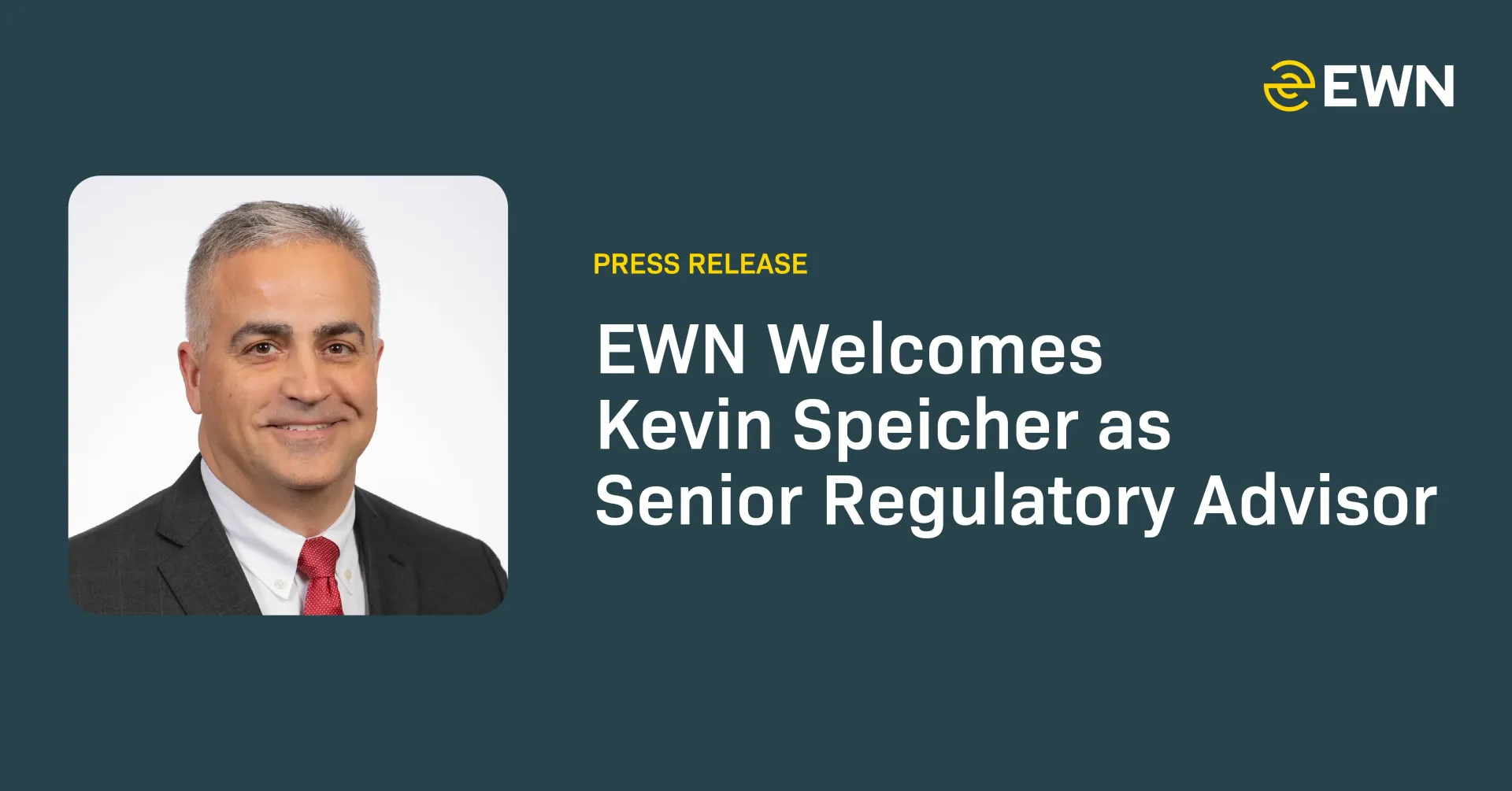

Operational Controls and Training: Why is Knowing "Why" Important?

Energy Worldnet (EWN) • April 8, 2020

Share this article

Policies, procedures, and protocols within an organization are in place to provide directions, instructions, and/or guidance to individuals regarding acceptable behavior under certain circumstances and/or "how" something is to be done. There are times, unfortunately, that the "Why" behind a given set of instructions or guidance is not made clear. Blindly following the "how" can get us into trouble!

Back in the early '90s, I was Director of Internal Auditing for an investor-owned LDC in the Midwest. I would regularly go out on compliance and operational audits with my staff to witness first-hand what they were experiencing when they completed their audits. I specifically remember one instance where I asked one of the construction workers on a job, "Why are you doing that?" The response was what I expected – "Because that is the way we have always done it!"

I asked the question again only a little differently "Why are you doing that particular step that way?" Again, the response I received was as expected – "Because that is the way I was trained to do it."

I asked the question yet again only this time I worded the question in such a way as to give the worker a better idea of what I was after from him, "Why do you suppose the company wants you to complete this step that way, and what do you suppose this step is meant to accomplish?" The worker looked at me and said, "I guess I don't know. Why?"

At that moment, I realized we might have a problem. Our workers knew "How" to do their jobs, and they regularly performed well; however, the intent or the "Why" of the procedures, steps, or instructions they were trained to follow, was not being communicated.

Fast forward to today. Because of Operator Qualification (OQ) regulations, many pipeline operators now have comprehensive training and qualification programs in place that provide workers additional insights into the "Whys" associated with the covered tasks they are to perform. Today's workers are required to possess the requisite knowledge, skills and abilities (KSAs) to competently and safely perform a covered task plus they must be able to recognize and react to abnormal operating conditions (AOCs) they may encounter while performing that task. These requirements certainly help with making sure the "How" is correctly followed, but the requirement to know the "Why" behind a given procedure or task, however, is not required.

In order to help make sure workforces do not blindly follow the "How" (aka – written procedures), Operators must be engaged and intentionally make sure their workforce understands the "Why" behind the tasks they perform and the procedures they are asked to follow. This is particularly important when considering Management of Change (MOC). API RP 1173 (Pipeline Safety Management Systems) specifically requires that one of the elements of a MOC Procedure is that the reason for the change, the "Why," must be included.

I am sure every operator has at least one individual that does not like change. If that individual has been performing the same task for thirty years in the same manner and then is suddenly told to complete that task differently, my guess is that if they are not informed of the reason "Why" the change is being made, they may not comply because they don't understand or appreciate the reason for it.

Just imagine how much safer our industry would be if the entire workforce not only understood the "What" and the "How," but also knew the "Why"!

Steve Allen
Executive Director, Pipeline Safety
Energy Worldnet

Recent Posts

By Kevin Speicher July 24, 2026
PHMSA just issued ADB-2026-06, an advisory bulletin reminding gas distribution operators of their existing obligations under 49 CFR Part 192, subpart P.

By Kevin Speicher July 22, 2026
On July 30, 2026 PHMSA is bringing the Gas Pipeline Advisory Committee & the Liquid Pipeline Advisory Committee together for a virtual meeting.
By Energy Worldnet (EWN) July 10, 2026
EWN's Regulatory Advisory Group breaks down RP 1173, PHMSA's new leadership, ECA rulemaking, multi-state OQ compliance, and PSMS for small operators.

By Kevin Speicher June 24, 2026
PHMSA's new approach of issuing 40+ targeted rulemakings instead of mega rules, and what the substantive changes mean for pipeline operators.

By Kevin Speicher June 24, 2026
PHMSA's Technical Pipeline Safety Standards Committee (GPAC) met on May 28, 2026, to work through the Safety of Gas Distribution Pipelines rule. Here's what happened and what operators need to know.

By Kevin Speicher June 19, 2026
Span of control refers to the practice of allowing an unqualified worker to perform a covered task while being directed and observed by a qualified person.
By Energy Worldnet (EWN) May 27, 2026
Former PHMSA leaders discuss PSMS, OQ, safety culture, contractor oversight, and the future of pipeline safety and compliance.
By Kevin Speicher April 30, 2026
PHMSA reinforcing sharper operational expectations: excavation damage remains one of the leading threats to pipeline safety.
Compliance Leadership Forum title slide on a dark blue screen with yellow and white text.
By Ashley Jesko February 26, 2026
Energy Worldnet (EWN) hosted the first-ever Compliance Leadership Forum (CLF)—a peer-to-peer space designed for candid, practical conversations about pipeline compliance and safety. Hosted by James Cross (Chief Experience Officer, EWN), the session brought together more than 150 years of combined experience from former state and federal regulators and industry leaders. Meet the panel Kevin Speicher, Senior Regulatory Advisor, EWN; former Chief of Pipeline Safety, New York State Department of Public Service Steve Allen, former Director of Pipeline Safety, State of Indiana; longtime PSMS advocate and former EWN executive Alan Mayberry, former PHMSA Associate Administrator, now with Jana and serving on boards focused on advanced risk and geohazards Jeff Wiese, former PHMSA Associate Administrator; former offshore operations leader; longtime safety management advocate The tone was clear from the start: no judgment, anonymous questions, and a focus on what operators can actually do next.
EWN PHMSA Update graphic with “Read More” on a dark teal background
By Kevin Speicher February 19, 2026
PHMSA has issued Advisory Bulletin ADB-2026-04, reminding gas pipeline, underground natural gas storage (UNGS), and LNG operators that incidents must be reported to the National Response Center (NRC) at the earliest practicable moment — and no later than one hour after confirmed discovery.

Show More