
Program Effectiveness – The Responsibility of Everyone

Energy Worldnet (EWN) • August 6, 2018

Share this article

What are you doing to make the world a safer place to work? Does your program continually reduce incidents or accidents caused by human error? How effective is your current OQ Program? These are some of the questions you should be asking yourself regarding Program Effectiveness.

What is Program Effectiveness?

The American Society of Mechanical Engineers (ASME) offers an explanation on the Program Effectiveness Process. B31Q Standard, Part 11.1 states that "the qualification program shall include a process to appraise its effectiveness." That "process" includes 3 parts – (1) Program Implementation, (2) Program Measures, and (3) Program Updates.

  1. Program Implementation: is used to "develop a process to evaluate if the program is being implemented and executed as intended."
  2. Program Measures: is done to "appraise the effectiveness of the program."
  3. Program Updates: is "incorporating changes into the program to address any deficiencies found as a result of the program implementation appraisals or program measures review."

It is recommended that you perform a program effectiveness review once every year at intervals not exceeding fifteen months. Projects, companies, and work environments change; with that, so do our OQ and other safety programs. That is why they must be reviewed annually.

Isn't Program Effectiveness just something that Operators have to deal with?

The answer to that is no. When it comes to Program Effectiveness, it takes all stakeholders involved to buy in and ensure that the programs they have are effective and continuously improving. That way, when Operators and Contractors work together on projects, they know they are cultivating a safer work environment in which their companies' programs are as effective as they can be.

At EWN, we often say that our goal is to continuously "Be Better." As a pipeline facility Operator or Contractor, constantly and consistently reviewing your OQ program requirements and results for effectiveness is a solid and measurable way to be better, and in turn, make the industry better.

Operators – Raise the Bar

Operators must commit to 'raising the bar' and developing programs that go beyond the minimum regulatory requirements. We must all become better at what we do. Each program must address the specific needs of the Operator, the pipeline facilities, and the environment in which they are operated.

Contractors – Offer Solutions

Contractors need to be a part of the solution, not the problem. To overcome the challenges that we face, all parties must do more and share the burden for increased expectations, accountability and transparency. For example, the Distribution Contractors Association (DCA) is spear-heading an initiative that promotes higher standards for the Contractor qualifications on core competencies. The initiative includes a whole section on Program Effectiveness Reviews that covers the process and expected outcomes for what a Contractor's Program Effectiveness reviews should look like.

Regulators – Collaborate

Regulators themselves must be willing to engage in collaborative processes that promote voluntary program improvements. Operators that want to use a more effective solution that goes beyond the minimum requirements of the Written OQ Plan may be disincentivized if they can be cited for violating the plan.

Program Effectiveness is something in the industry that is encouraged, but not yet regulated. A direct quote from PHMSA's Notice of Proposed Rulemaking (NPRM) says that "PHMSA is also proposing to expand the existing Operator Qualification (OQ) scope to cover new construction and certain other currently uncovered tasks, require operators use trained and qualified individuals when performing new construction work, and add program effectiveness requirements for operators to gauge the effectiveness of the OQ programs."

Recent Posts

By Kevin Speicher July 24, 2026
PHMSA just issued ADB-2026-06, an advisory bulletin reminding gas distribution operators of their existing obligations under 49 CFR Part 192, subpart P.

By Kevin Speicher July 22, 2026
On July 30, 2026 PHMSA is bringing the Gas Pipeline Advisory Committee & the Liquid Pipeline Advisory Committee together for a virtual meeting.
By Energy Worldnet (EWN) July 10, 2026
EWN's Regulatory Advisory Group breaks down RP 1173, PHMSA's new leadership, ECA rulemaking, multi-state OQ compliance, and PSMS for small operators.
By Kevin Speicher June 24, 2026
PHMSA's new approach of issuing 40+ targeted rulemakings instead of mega rules, and what the substantive changes mean for pipeline operators.
By Kevin Speicher June 24, 2026
PHMSA's Technical Pipeline Safety Standards Committee (GPAC) met on May 28, 2026, to work through the Safety of Gas Distribution Pipelines rule. Here's what happened and what operators need to know.
By Kevin Speicher June 19, 2026
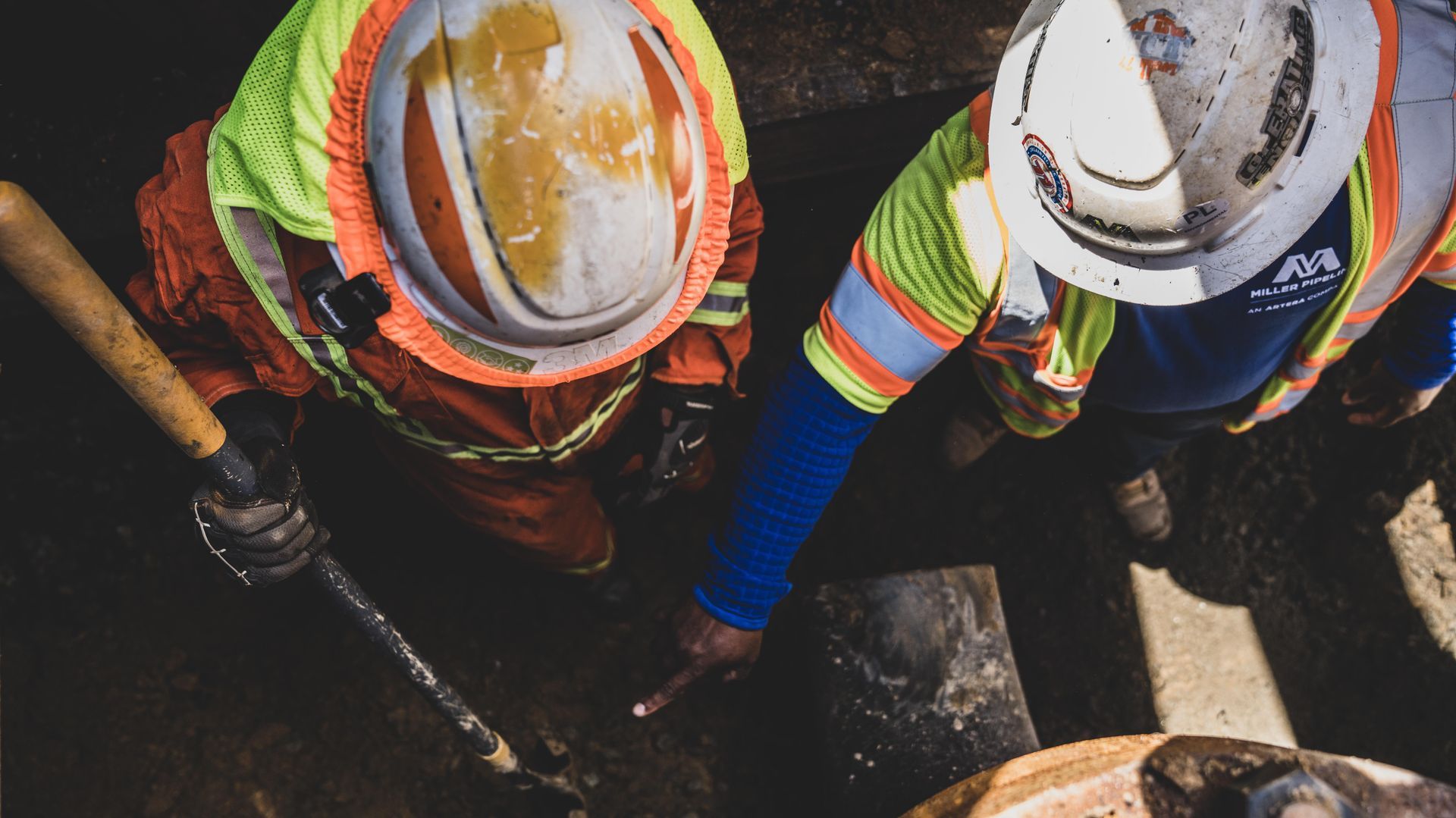
Span of control refers to the practice of allowing an unqualified worker to perform a covered task while being directed and observed by a qualified person.
By Energy Worldnet (EWN) May 27, 2026
Former PHMSA leaders discuss PSMS, OQ, safety culture, contractor oversight, and the future of pipeline safety and compliance.
By Kevin Speicher April 30, 2026
PHMSA reinforcing sharper operational expectations: excavation damage remains one of the leading threats to pipeline safety.
Compliance Leadership Forum title slide on a dark blue screen with yellow and white text.
By Ashley Jesko February 26, 2026
Energy Worldnet (EWN) hosted the first-ever Compliance Leadership Forum (CLF)—a peer-to-peer space designed for candid, practical conversations about pipeline compliance and safety. Hosted by James Cross (Chief Experience Officer, EWN), the session brought together more than 150 years of combined experience from former state and federal regulators and industry leaders. Meet the panel Kevin Speicher, Senior Regulatory Advisor, EWN; former Chief of Pipeline Safety, New York State Department of Public Service Steve Allen, former Director of Pipeline Safety, State of Indiana; longtime PSMS advocate and former EWN executive Alan Mayberry, former PHMSA Associate Administrator, now with Jana and serving on boards focused on advanced risk and geohazards Jeff Wiese, former PHMSA Associate Administrator; former offshore operations leader; longtime safety management advocate The tone was clear from the start: no judgment, anonymous questions, and a focus on what operators can actually do next.
EWN PHMSA Update graphic with “Read More” on a dark teal background
By Kevin Speicher February 19, 2026
PHMSA has issued Advisory Bulletin ADB-2026-04, reminding gas pipeline, underground natural gas storage (UNGS), and LNG operators that incidents must be reported to the National Response Center (NRC) at the earliest practicable moment — and no later than one hour after confirmed discovery.

Show More