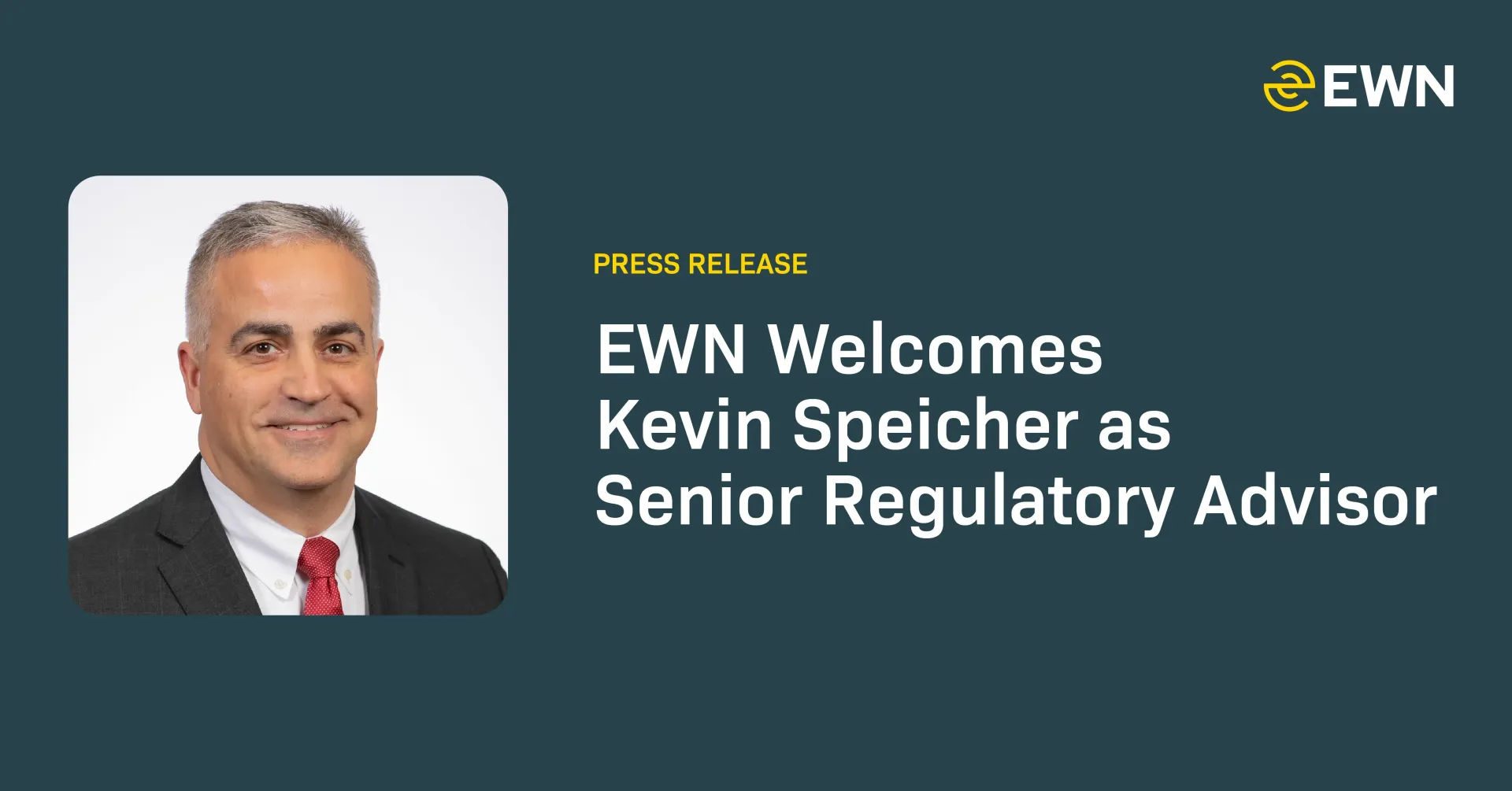
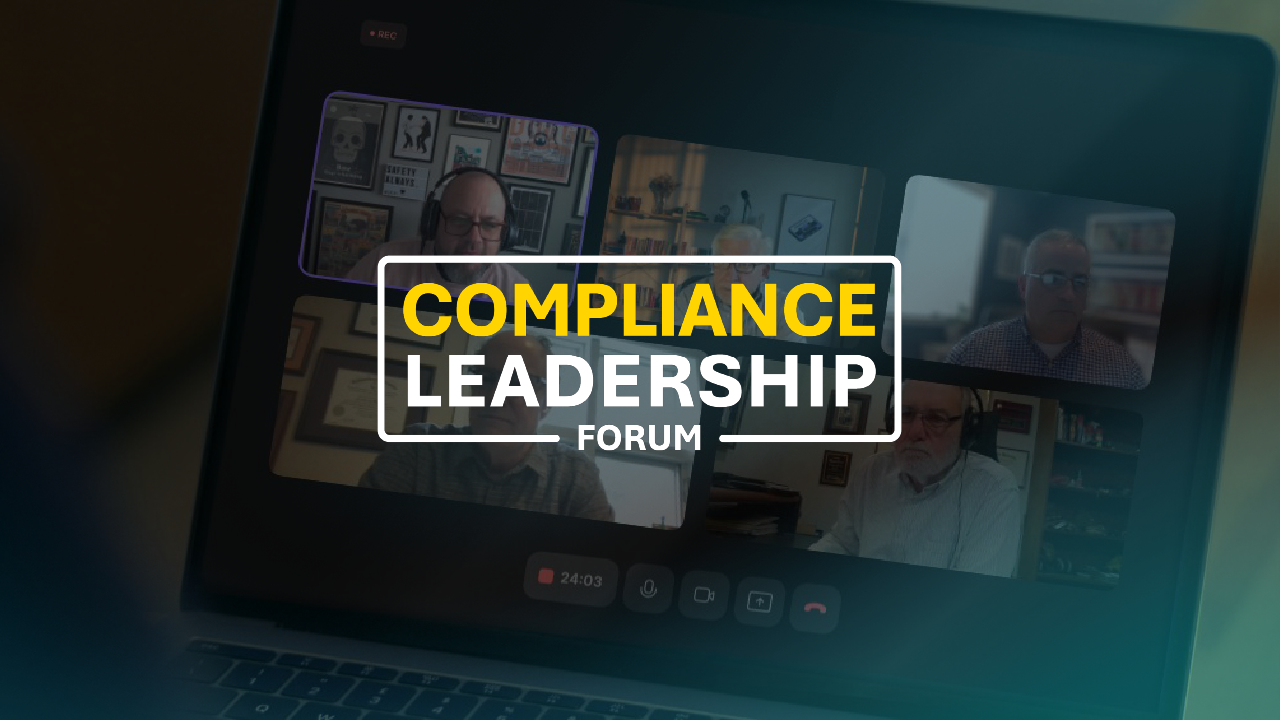
Energy Worldnet (EWN) hosted the Compliance Leadership Forum (CLF) —a peer-to-peer space designed for candid, practical conversations about pipeline compliance and safety. Hosted by James Cross (Chief Experience Officer, EWN) , the session brought together more than 150 years of combined experience from former state and federal regulators and industry leaders. Meet the panel Kevin Speicher , Senior Regulatory Advisor, EWN; former Chief of Pipeline Safety, New York State Department of Public Service Steve Allen , former Director of Pipeline Safety, State of Indiana; longtime PSMS advocate and former EWN executive Alan Mayberry , former PHMSA Associate Administrator, now with Jana and serving on boards focused on advanced risk and geohazards Jeff Wiese , former PHMSA Associate Administrator; former offshore operations leader; longtime safety management advocate The tone was clear from the start: no judgment, anonymous questions, and a focus on what operators can actually do next. Compliance Leadership Forum: Discussion & Key Takeaways A busy quarter of industry events James Cross and the Regulatory Advisory Group recapped three major events from the past quarter. AGA Operations Fall Committee Meetings & PSMS Workshop: Kevin Speicher, attending for the first time, called out the depth of AGA's working groups and the heavy PSMS focus. A major takeaway: management of change is coming, with details expected once PHMSA releases its distribution rule. NTSB was also present, discussing distribution integrity management and gas alarm recommendations from recent investigations. Pipeline Safety Trust Conference (New Orleans): Alan Mayberry highlighted a panel led by NTSB member John DeLou on applying aviation-style safety management systems and near-miss reporting to pipelines—an area he expects to see renewed interest in through any PHMSA reauthorization. A tabletop exercise on an HDD dig-in, organized with Illinois state program manager Matt Smith, proved especially effective at showing the public how complex emergency decision-making really is. Next year's conference moves to Chicago. APGA Fall Operations Conference (Savannah): Kevin Speicher relayed comments from PHMSA Chief Counsel Keith Cole, who emphasized "smarter" regulations with less ambiguity and, when asked directly, told operators the most important thing they can do right now is start their PSMS journey. Steve Allen added that APGA's 730+ municipal systems are eager to move on PSMS once EWN and CIF's PSMS program assessment tool is released. RP 1173 second edition: nearly there Jeff Wiese and Steve Allen, both on the API RP 1173 rewrite committee, confirmed the second edition is targeted for release around Thanksgiving. Key takeaway: this is a reorganization more than an overhaul. The biggest structural change is removing the standalone safety culture section and weaving safety culture guidance into each element instead. Three new appendices round things out—small operator implementation guidance, stakeholder engagement (aligned with RP 1185), and process safety—with the small operator guidance directly informing EWN's forthcoming assessment tool. Steve Allen noted API won't begin assessing operators against the new standard until six months after publication. LNG rulemaking: a long-overdue update Alan Mayberry walked through a newly released NPRM updating PHMSA's LNG regulations—something he called the agency's most outdated rule, still largely designed around older peak-shaving facilities rather than today's large-scale export terminals. Highlights: A renumbered regulatory framework and an update to the incorporated NFPA 59A standard (moving well past the 2001 edition). New risk-based provisions for both operations/maintenance and facility siting, a shift from the traditional large-parcel/vapor-dispersion approach. Comment period runs through January 4—Alan encouraged individual operators to submit comments, not just rely on trade associations. He also flagged PHMSA's LNG Center of Excellence in Lake Charles, Louisiana, which is hosting an in-person best practices workshop in early December (pre-registration open through November 27). The "future of heat" debate: gas isn't going anywhere soon Jeff Wiese walked through three reports operators—especially LDCs and municipals—should have on their radar: one from the Future of Heat Initiative (which advises public utility commissions on transitioning away from gas systems), AGA's response to it, and a deeper statistical analysis from the Northeast Gas Association on infrastructure spending and safety outcomes. Citing EIA's annual energy outlook, Jeff noted that under every modeled scenario, natural gas demand remains strong for decades. He raised practical questions largely missing from the transition debate: the cost of converting individual households, strain on the electrical grid, and the significant energy loss (up to 60%) when generating and transmitting electricity compared to burning gas directly at the point of use. The panel's consensus: Legacy infrastructure (cast iron, bare steel) genuinely needs to come out of the ground—Kevin Speicher noted cast iron mileage has dropped from 36,000 miles in 2011 to roughly 14,000 today. But a wholesale, rapid move away from gas isn't realistic, and incident-count metrics used to argue against infrastructure spending may be flawed without deeper data analysis. Operators facing rate cases related to this debate should make sure their rates teams are aware of all three reports. As Alan Mayberry put it: the molecule of gas gets burned somewhere in the world regardless—exporting it instead of using it doesn't eliminate demand. Aligning OQ programs with state regulators Asked for best practices on aligning OQ programs with state regulators, Kevin Speicher and Steve Allen kept it simple: engage early and often. Understand how your state interprets and applies its rules—ask when you're unsure rather than guessing. Have regular conversations with your regulator, not just compliance meetings after something's gone wrong. As Steve Allen put it: "Pick up the phone, man. They don't bite." Emerging technology: data analysis is the real frontier Steve Allen pointed to data analysis—not any single new sensor or tool—as the technology area with the biggest near-term impact. Operators are increasingly capturing integrity data, damage prevention data, near-miss/good-catch data, and PSMS KPIs, and the operators getting ahead are the ones hiring data scientists to turn that volume of data into better-informed decisions, including where to spend on system improvements. Alan Mayberry added a caution: not every new technology delivers on its promise (citing past experience with amp fittings and shrink sleeves), and the code needs to allow room for innovation while keeping guardrails in place as new assessment methods and technologies are adopted. Damage rate as a PHMSA metric: a flawed standard An operator asked how PHMSA can meaningfully use damage rate when ticket definitions vary state to state. Steve Allen didn't mince words: the current damages-per-thousand-tickets metric is flawed and due for a rework, and better root-cause data from 7100 reports would be a stronger foundation. Alan Mayberry noted PHMSA's national performance measures (available on the agency's Data and Statistics page) haven't been revisited in some time, partly due to the burden of updating federally-collected information. He pointed to the Common Ground Alliance's root-cause decision tree as a resource that, if consistently applied, would improve data quality industry-wide. Election impact: too soon to say Asked how the recent election and year-end transition might affect the industry—including the pending LNG and ECA rulemakings—Alan Mayberry and Jeff Wiese were candid that priorities shift with administrations, but outcomes on specific rules remain uncertain, particularly with oversight committee leadership now shifting. Jeff's take: it's early, and by and large, administrations of differing political stripes have been more alike than different in their commitment to the safety mission. Closing Thoughts: Why PSMS? To close, James Cross asked each panelist why they'd become such strong advocates for Pipeline Safety Management Systems: Jeff Wiese: Federal code is a minimum standard, not a safety guarantee—SMS is how the industry actually gets to safe, reliable systems for the long term. Alan Mayberry: You can't regulate your way to zero accidents. Going beyond compliance, including future volunteer information-sharing systems, is what closes the gap. Steve Allen: A lifelong draw to management-systems thinking, reinforced by early exposure to a fatal incident on the job—PSMS was the natural next chapter of his career. Kevin Speicher: Compliance-only thinking risks becoming a check-the-box exercise; SMS, being voluntary, pushes operators to improve because they want to, not just because the code requires it. Alan Mayberry closed with a prediction worth watching: a formal SMS requirement, even just a planning mandate, may be closer than many expect. What's next EWN will follow up directly on unanswered questions and continue the conversation through LinkedIn and future sessions. The 2027 Compliance Leadership Forum schedule is coming soon. James wrapped up the session: "How blessed are we to get to hang out and just yap about this awesome industry we serve. Until next time, be safe, keep doing the good work out there."
Up to half the utility workforce could retire within a decade. Here's why OQ onboarding speed, not headcount alone, is becoming the real safety variable.

Every OQ program rests on 9 provisions in 49 CFR 192.805. Here's each one explained in full, with the specific requirement behind it.

PHMSA just issued ADB-2026-06, an advisory bulletin reminding gas distribution operators of their existing obligations under 49 CFR Part 192, subpart P.

On July 30, 2026 PHMSA is bringing the Gas Pipeline Advisory Committee & the Liquid Pipeline Advisory Committee together for a virtual meeting.
EWN's Regulatory Advisory Group breaks down RP 1173, PHMSA's new leadership, ECA rulemaking, multi-state OQ compliance, and PSMS for small operators.

PHMSA's new approach of issuing 40+ targeted rulemakings instead of mega rules, and what the substantive changes mean for pipeline operators.

PHMSA's Technical Pipeline Safety Standards Committee (GPAC) met on May 28, 2026, to work through the Safety of Gas Distribution Pipelines rule. Here's what happened and what operators need to know.

Span of control refers to the practice of allowing an unqualified worker to perform a covered task while being directed and observed by a qualified person.
Former PHMSA leaders discuss PSMS, OQ, safety culture, contractor oversight, and the future of pipeline safety and compliance.